Wading bird ecology
wading bird nesting, foraging behavior, and diet
Although the lab focuses primarily on evolutionary biology and speciation, many of the questions that we ask are influenced by ecology. For example, in our project on divergence in the Great Blue and Great White herons, the reasons for the evolutionary persistence of the Great White Heron are likely due to differences in the ecology of this all-white form. As such, we are investigating differences in foraging success, breeding success, and diet between these two subspecies.
This work is primarily led by undergraduate students, and involves both field work and analysis of crowdsourced image data in public repositories such as eBird and iNaturalist, where students search for images of wading birds with prey and categorize the predator and prey species. Our field work focuses on field observation of foraging herons and egrets to determine foraging success and dietary preferences in relation to habitat, age, and color morph.


FGCU is a regional comprehensive university, and our mission is to serve the community of Southwest Florida. The region has a long and sordid history related to wading birds. At the turn of the twentieth century, Fort Myers was the main port for exporting bird plumes for the millinery trade, and was the third largest export for the city by 1899. Opposition to this practice gave rise to the modern conservation movement, establishment of the National Audubon Society, and passage of the Migratory Bird Treaty Act of 1918. Despite these species now being protected, three are still state listed as Threatened, the Tricolored Heron, Little Blue Heron, and Reddish Egret.
Our lab has ongoing projects related to these and other local wading bird species, employing the same methods described above for the Great Blue Herons. Thanks to financial support from the Macias Wildlife Society, we are monitoring wading bird rookeries and wetland restoration sites in Bonita Springs to study how these and other wading bird species are faring in developed areas. This work is done in collaboration with Dr. Andrew Durso, who is investigating the fish, reptiles, and amphibians present at our study sites to determine the prey base available to these wading birds.
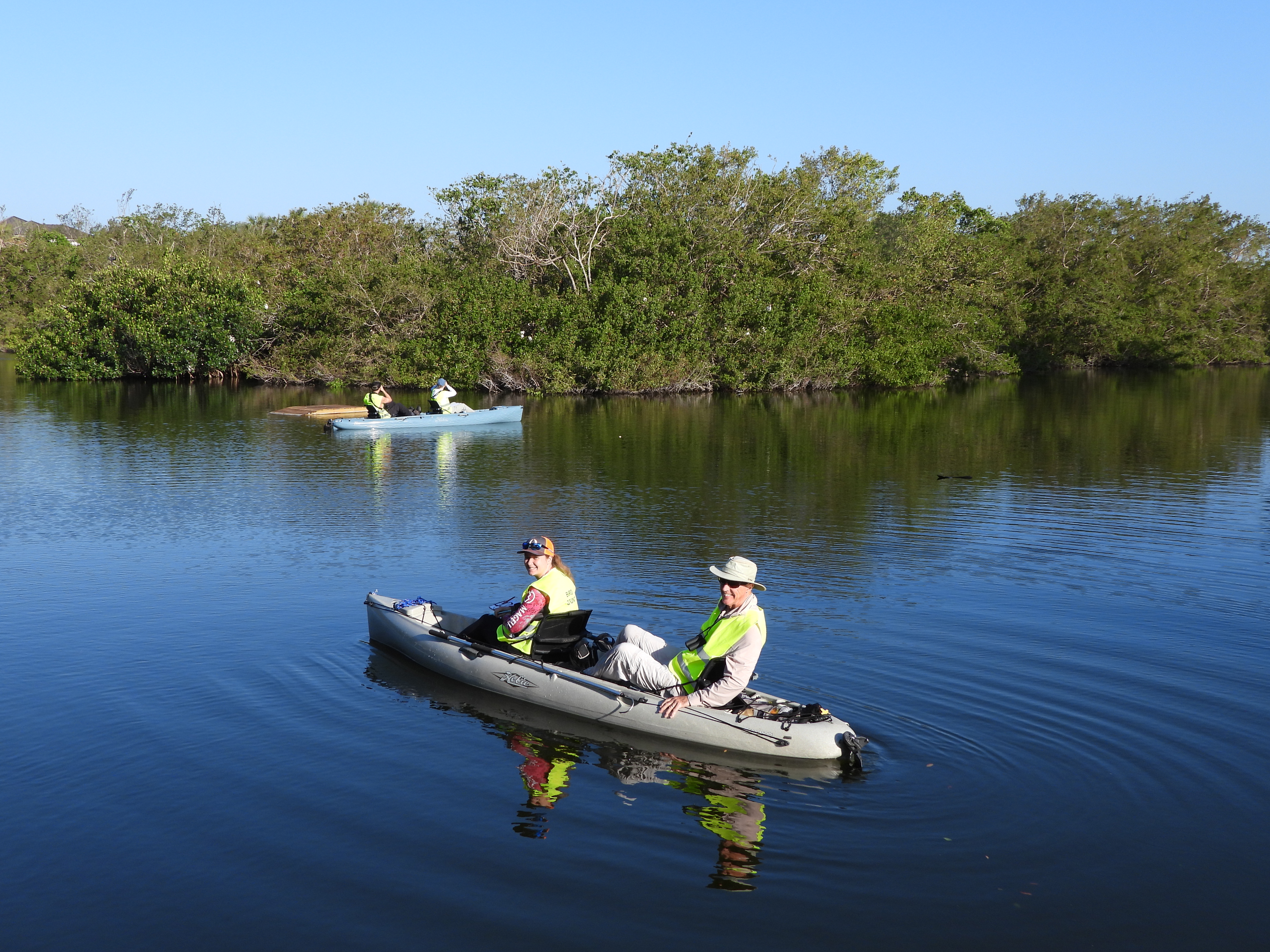


We also collaborate with the Florida Department of Environmental Protection (Florida DEP) to monitor wading bird colonies in Aquatic Preserves.